Ramen, gyoza and onigiri
Soy sauce and miso broths, hand-folded gyoza and shaped onigiri, in about ninety minutes with English-speaking instructors. No noodle-making; coffee and tea are free.
See dates for this class ↗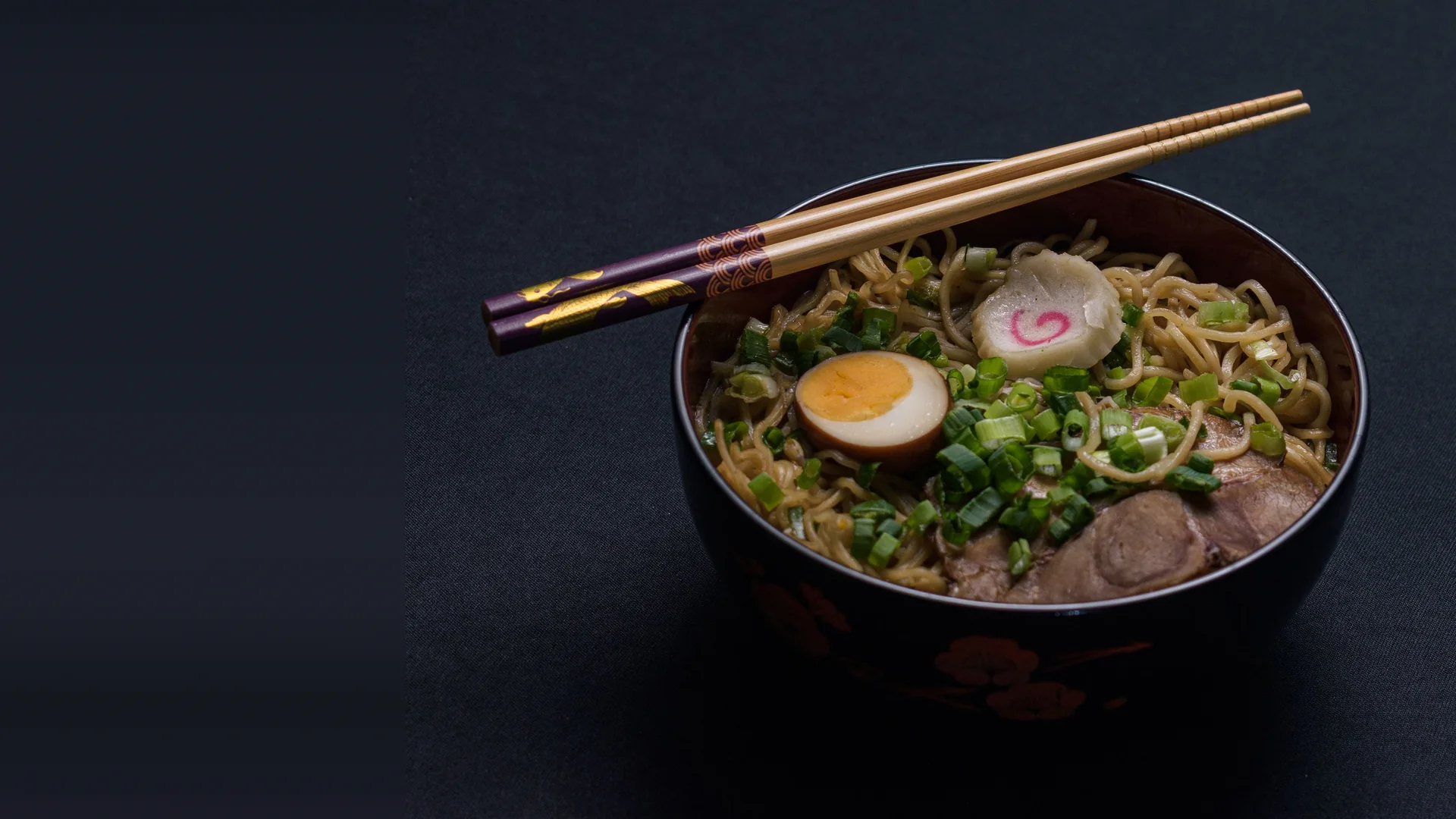
Cooking class · Kyoto
Soy sauce and miso broths, gyoza folded by hand and onigiri shaped to eat, all cooked in a Kyoto kitchen.
Likely to sell out, with the broth, the gyoza and the onigiri you made waiting for you at the table.
The class in four numbers
From apron to table
How the ninety minutes unfold, from the studio door to the table where you eat what you made.
The class teaches broth, gyoza and onigiri. Noodle-making is not part of it; if you want to knead the dough, the ramen-factory class below does that.
The studio sits in the basement of a building in Sakyō ward. Check-in opens fifteen minutes before the class: a quick tour, a name card, an apron and a wash of the hands. Coffee and tea are free while you wait.
You build a soy sauce broth and a miso broth from everyday ingredients: garlic, ginger, sesame oil, mirin, miso and a handful of seasonings. The instructors explain the order things go in and how to adjust the taste.
Each bowl is dressed with a short list of plain toppings, from the boiled egg and sweet corn of the miso bowl to the chicken and bamboo shoots of the soy sauce bowl. No fancy extras, just the balance.
First the filling, a mix of meat, vegetables and seasoning. Then the wrapping: the instructors show how to shape each dumpling so it keeps its form and seals properly, and you fold your own.
Rice goes into your hands and comes out as a rice ball. You learn how to shape it and how to fill it, an easy snack to carry and to eat by hand.
Everything you cooked is what you eat. Recipes for the ramen and the gyoza come with you, so the broth can happen again in your own kitchen.
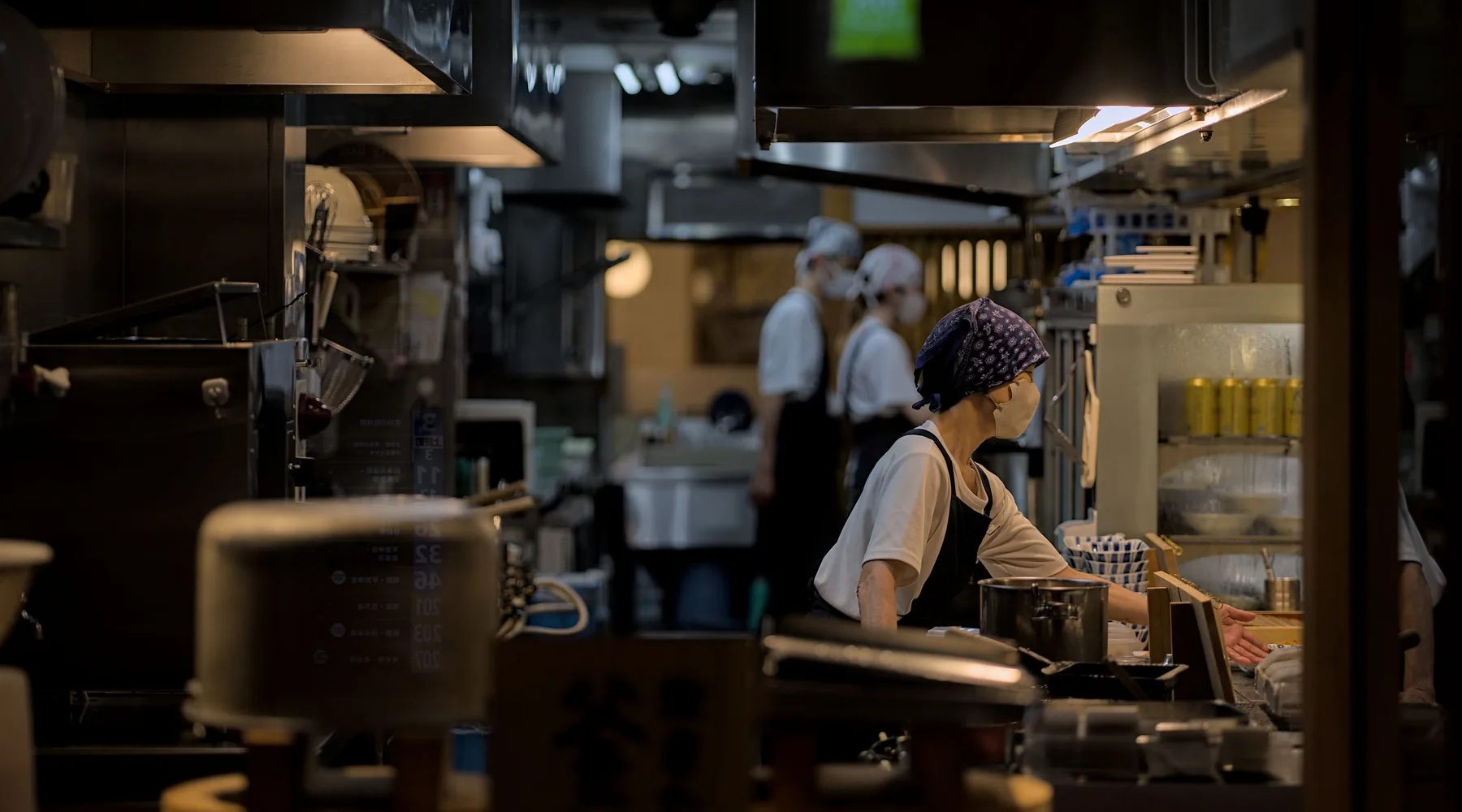
The cooking
Ramen is a Japanese-Chinese fusion dish: wheat noodles in a hot broth, most often flavoured with soy sauce or miso. This class is built around the broth, on the idea that noodles are easy to find wherever you live and a good soup is not. The noodles themselves are not made in this kitchen.
The miso bowl comes with a boiled egg, bean sprouts, green onions and sweet corn. The soy sauce bowl gets chicken, bamboo shoots and green vegetables. The toppings stay simple because the broth is meant to carry the flavour, a typical style in restaurants and in home kitchens alike.
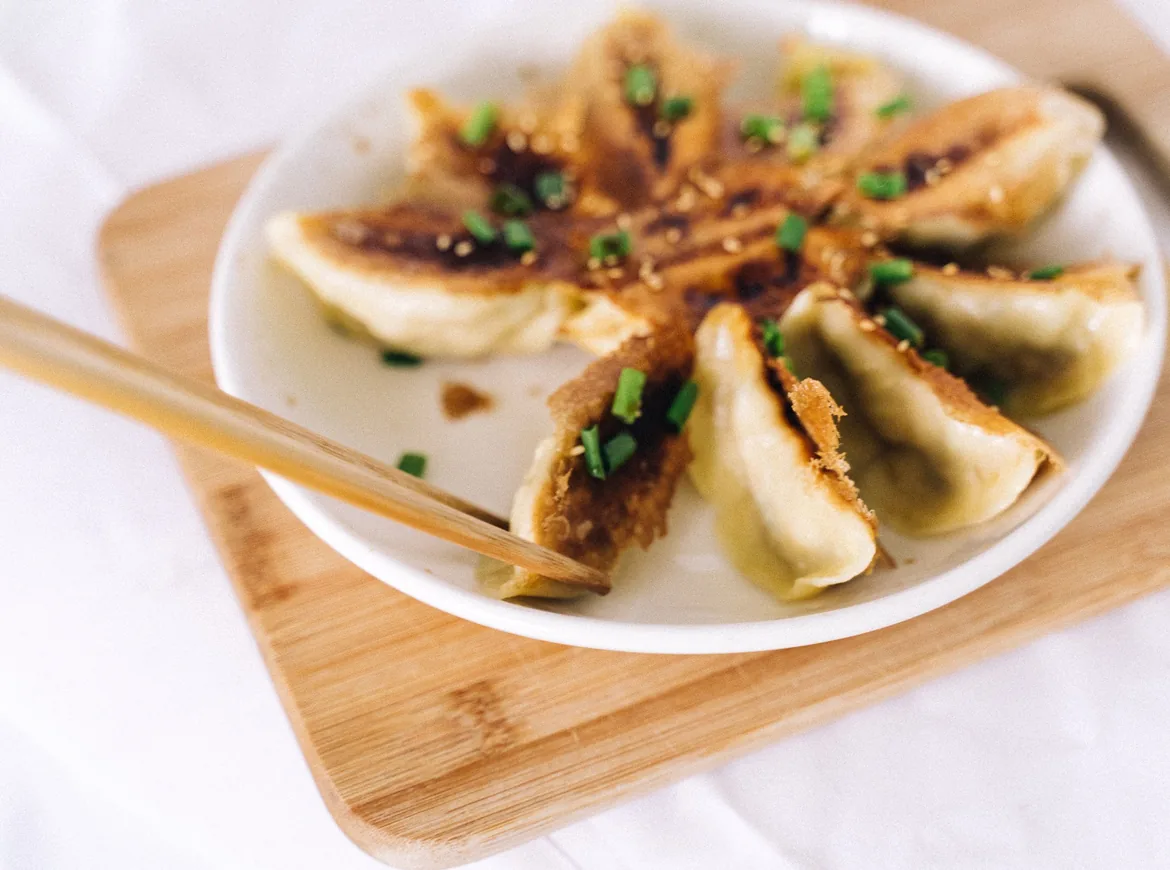
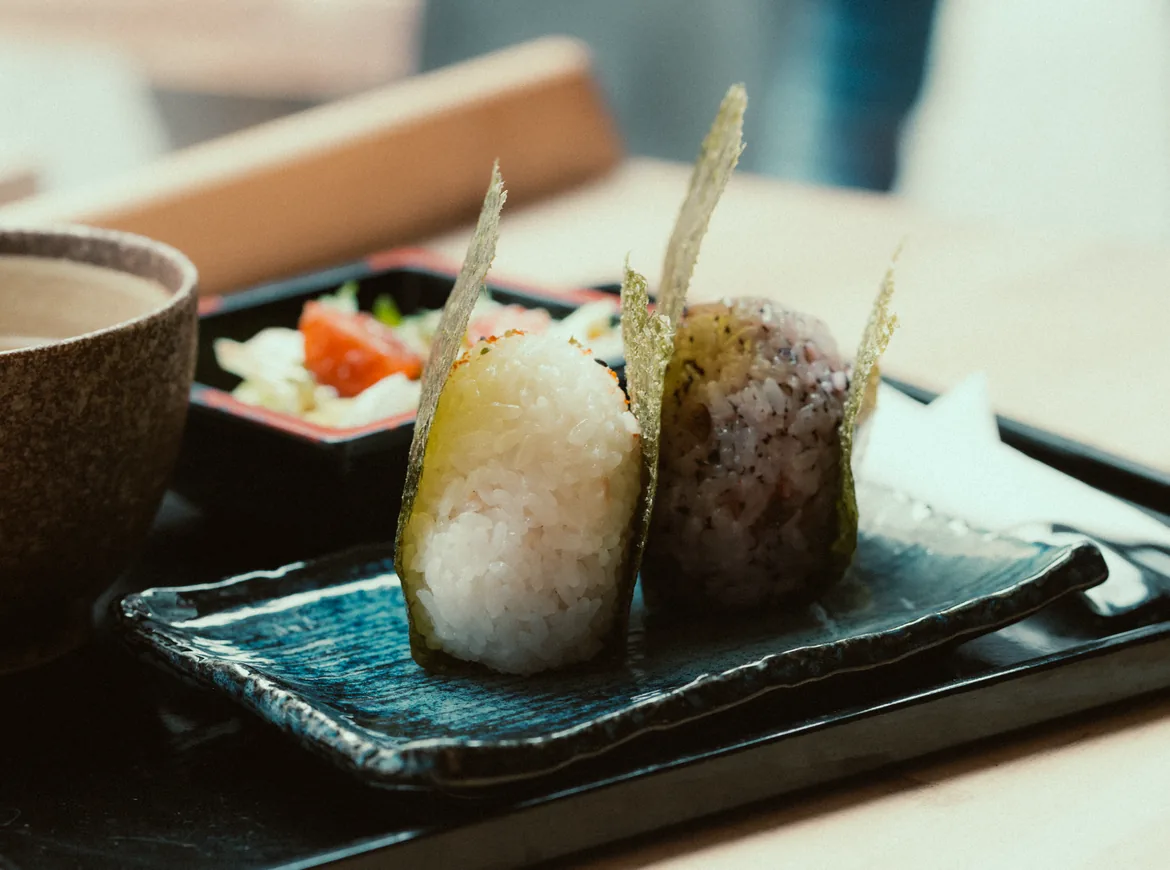
Gyoza are dumplings with a ground meat or vegetable filling, sealed by pressing the edges of thin dough together. Onigiri are Japanese rice balls, usually shaped into triangles or cylinders and wrapped in nori. Here you get the filling, the folding and the shaping, so the sides are as much a lesson as the soup.
Classes are capped at eight people. Guests describe groups of four to eight, instructors who answer questions as they go, and tips on which ingredients to swap for what is sold back home. You leave with the recipes for the ramen and the gyoza.
On the menu
The three dishes, what goes with each, and the menu choices the kitchen offers.
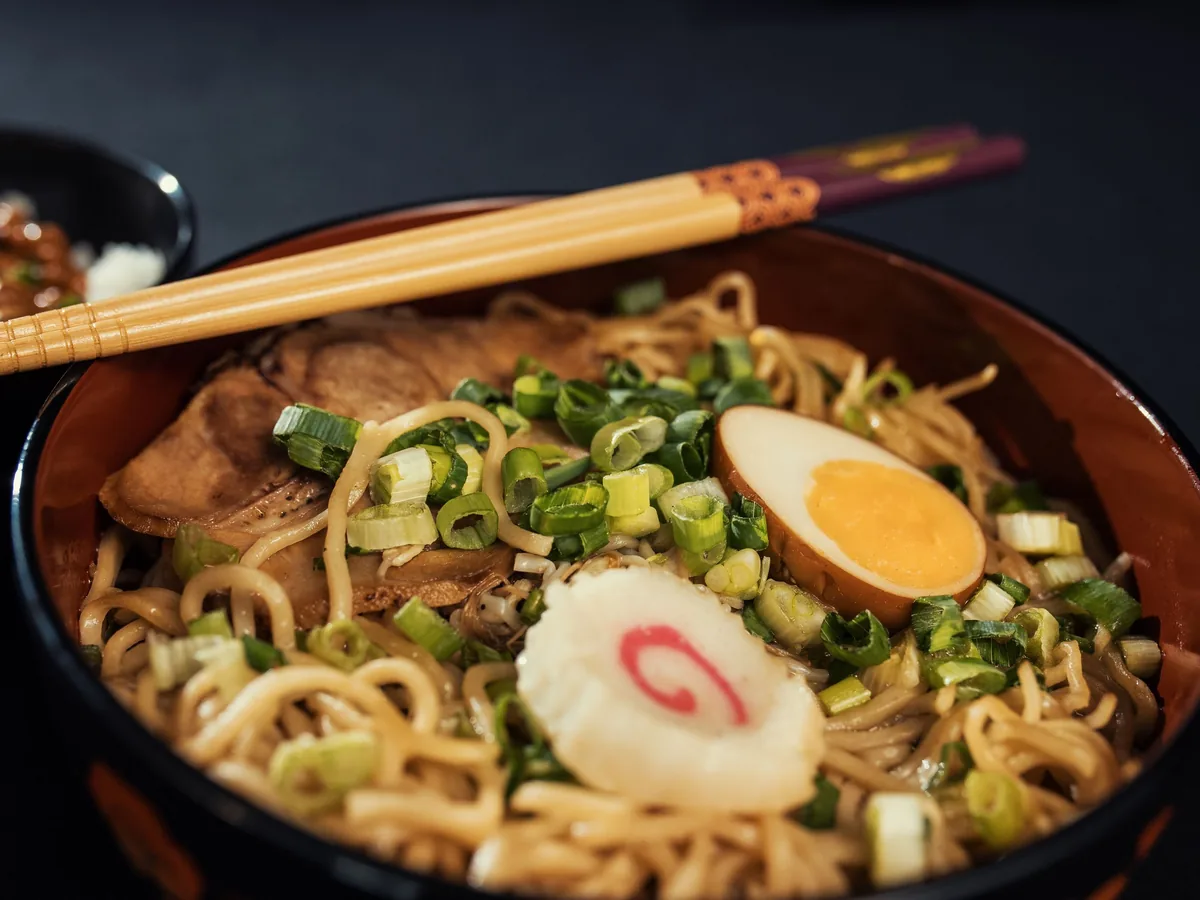
In pictures
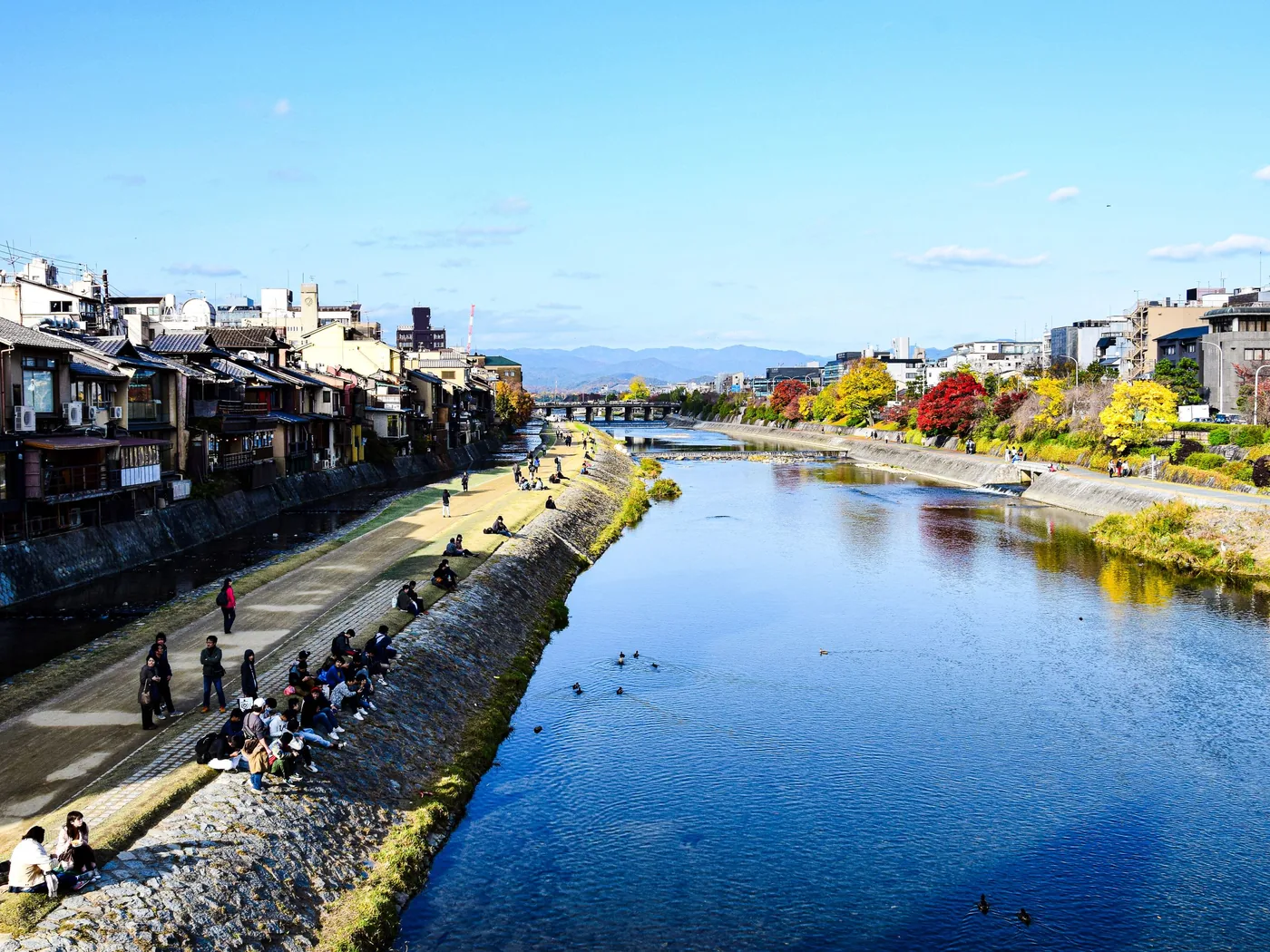
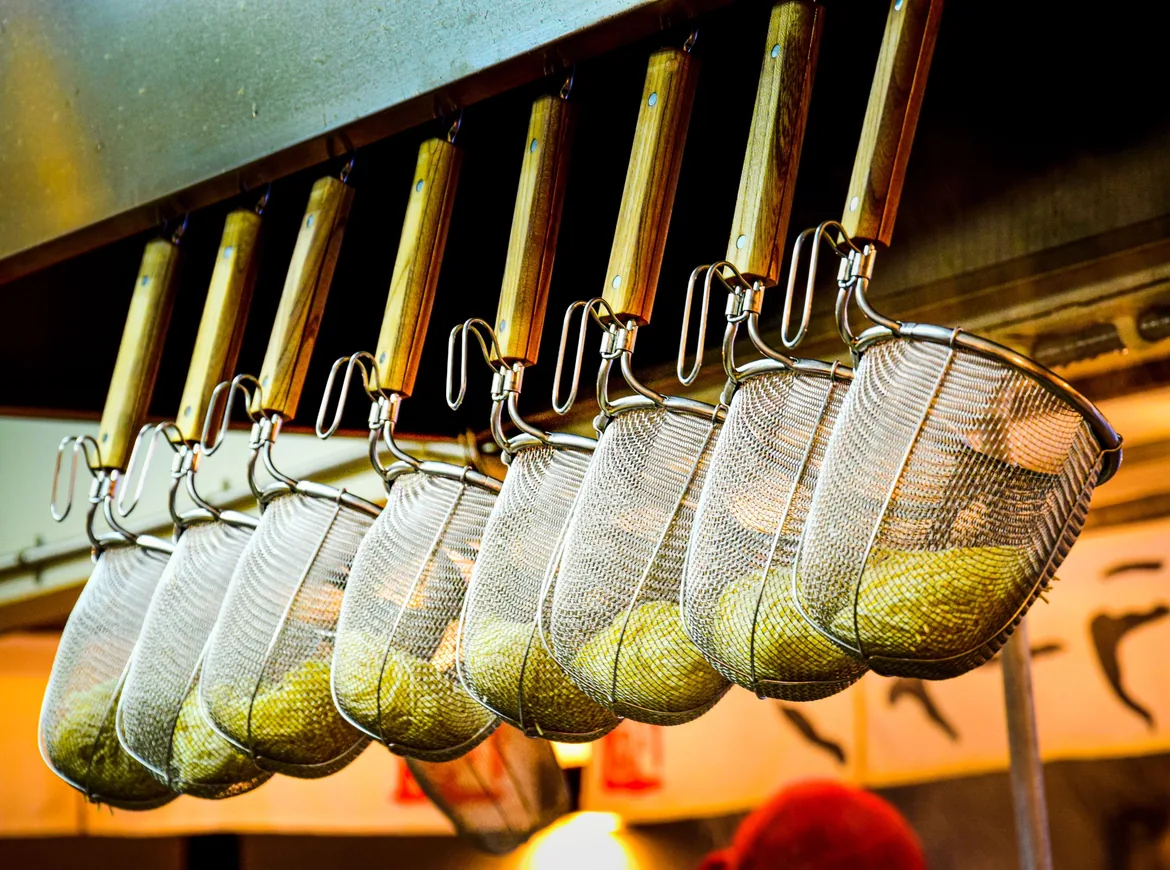
The dishes the class covers and the city around it, photographed by others; these are not pictures of a particular class.
Which class
| Class | What you make | Who it suits |
|---|---|---|
| Ramen, gyoza and onigiri | Soy sauce and miso broths, hand-folded gyoza and shaped onigiri, in about ninety minutes with English-speaking instructors. No noodle-making; coffee and tea are free. | Cooks who want a broth they can repeat at home, and travellers who like to eat several things they made. |
| Ramen from scratch | Noodles made by hand from flour to dough, with the dough folded over 100 times, then a soup base, oils and toppings of your choice. About ninety minutes, with a souvenir to take home. | People who want the noodles as well as the bowl, in a school set up by a well-known Kyoto ramen house. |
| Ramen, gyoza and fried rice | Hand-cut noodles, gyoza and fried rice from scratch with a ramen master and an English-speaking local guide, up to two and a half hours. Two drinks are included. | Groups, couples and solo travellers who want the longest, fullest class and a drink with the gyoza. |
Want to knead the noodles too? See the ramen-factory class ↗
Three kitchens, three bowls
A broth-and-gyoza class, a class that starts from the noodle dough, and a longer one that adds fried rice. Each one opens on GetYourGuide, and other ideas for your Kyoto days sit further down the page.
Soy sauce and miso broths, hand-folded gyoza and shaped onigiri, in about ninety minutes with English-speaking instructors. No noodle-making; coffee and tea are free.
See dates for this class ↗Noodles made by hand from flour to dough, with the dough folded over 100 times, then a soup base, oils and toppings of your choice. About ninety minutes, with a souvenir to take home.
See dates for this class ↗Hand-cut noodles, gyoza and fried rice from scratch with a ramen master and an English-speaking local guide, up to two and a half hours. Two drinks are included.
See dates for this class ↗More to do around Kyoto
Before you go
Check-in begins fifteen minutes before the class and the door is locked at the start time. Nobody is let in afterwards, even if they knock, so arrive at least ten minutes ahead, and fifteen is better.
The booking calendar shows the times for your date. The kitchen lists classes in the morning, around midday and mid-afternoon, with a suggested arrival time for each.
Two menus only: regular, or vegetarian with tofu instead of pork. Gluten-free, halal and other special diets cannot be accommodated, and people with gluten intolerance are listed as unsuited to the class.
Only one reservation per group is allowed. Duplicate bookings under the same name, for the same or other dates, are cancelled, and people who are not taking part are not admitted to watch.
Participants must be at least twelve and able to cook without staff doing it for them. The class is not suitable for wheelchair users or for people recovering from recent surgery.
Comfortable shoes and clothes you do not mind getting splashed. You get a mobile ticket straight after booking, so nothing needs printing.
Notes from a Kyoto food guide
From the apron to the last spoonful, what happens and when.
Read the note → the brothsHow the two bowls differ, and why the toppings stay plain.
Read the note → dietary needsA plain account of the menus before you book.
Read the note → choosingThree Kyoto kitchens and who each one is for.
Read the note → the sidesWhat the dumplings and the rice balls add to the class.
Read the note → taking it homeWhat goes in your luggage and what you can buy back home.
Read the note →FAQ
Only partly. The broth-and-gyoza class runs two menus: regular, and vegetarian, where tofu replaces the pork. Nothing else on the vegetarian menu changes, and the ingredient list includes chicken stock powder, oyster sauce, lard and fish powder, so strict vegetarians and vegans should think carefully. Gluten-free, halal and other special diets cannot be accommodated.
Not in the broth-and-gyoza class: it teaches the broth, the gyoza and the onigiri. The ramen-factory class and the ramen, gyoza and fried-rice class both start the noodles from flour.
The broth-and-gyoza class takes about an hour and a half and is capped at eight people. The ramen-factory class is also about ninety minutes, and the fried-rice class runs up to two and a half hours, shorter for small groups.
At the broth-and-gyoza kitchen the door is locked at the start time and nobody is admitted afterwards. The fried-rice class also starts on time and late arrivals cannot join, reschedule or be refunded, so aim to be there early.
The broth-and-gyoza class takes cooks aged twelve and over who can work without help from the staff. The fried-rice class admits guests of six and up, supervised near knives and hot steps, and nobody under five.
Free cancellation runs until 24 hours before the class, and nothing is charged when you reserve, so you can hold a seat while the rest of your Kyoto plans settle.
The broth-and-gyoza kitchen is in the basement of a building in Sakyō ward. The ramen-factory class is a five-minute walk from Demachiyanagi Station, in a basement down the stairs beside the supermarket. The fried-rice class meets at the Latitude 35 stone monument at the Shijō-Kawaramachi crossing, then walks about three minutes to the studio.
Yes. The broth-and-gyoza class gives you the ramen and gyoza recipes, the ramen-factory class includes the full recipe, and the fried-rice class sends downloadable recipes plus photos taken during the class.
GetYourGuide quotes the fare for your date and party size in your own currency and shows the total before you confirm.